
So last week I told you I was stepping out of the shadows. That felt good to say. Felt brave just typing it.
Turns out actually doing it? That's a whole different beast.
The First Time I Showed Up
I remember the first time I tried to tell someone outside my immediate circle what I'd been through. Not the cancer, people are weirdly okay with cancer. You say "cancer" and they bring casseroles and ask how chemo's going and nobody blinks.
But the other stuff? The domestic violence, the nights I didn't think I'd see morning, the years of rebuilding myself from scratch? That makes people uncomfortable.
I was sitting in what was supposed to be a "safe space", one of those support groups where everyone says the right things and nods at the right times. I'd practiced what I was going to say. Had it all scripted out in my head.
And then when it was my turn, I froze.
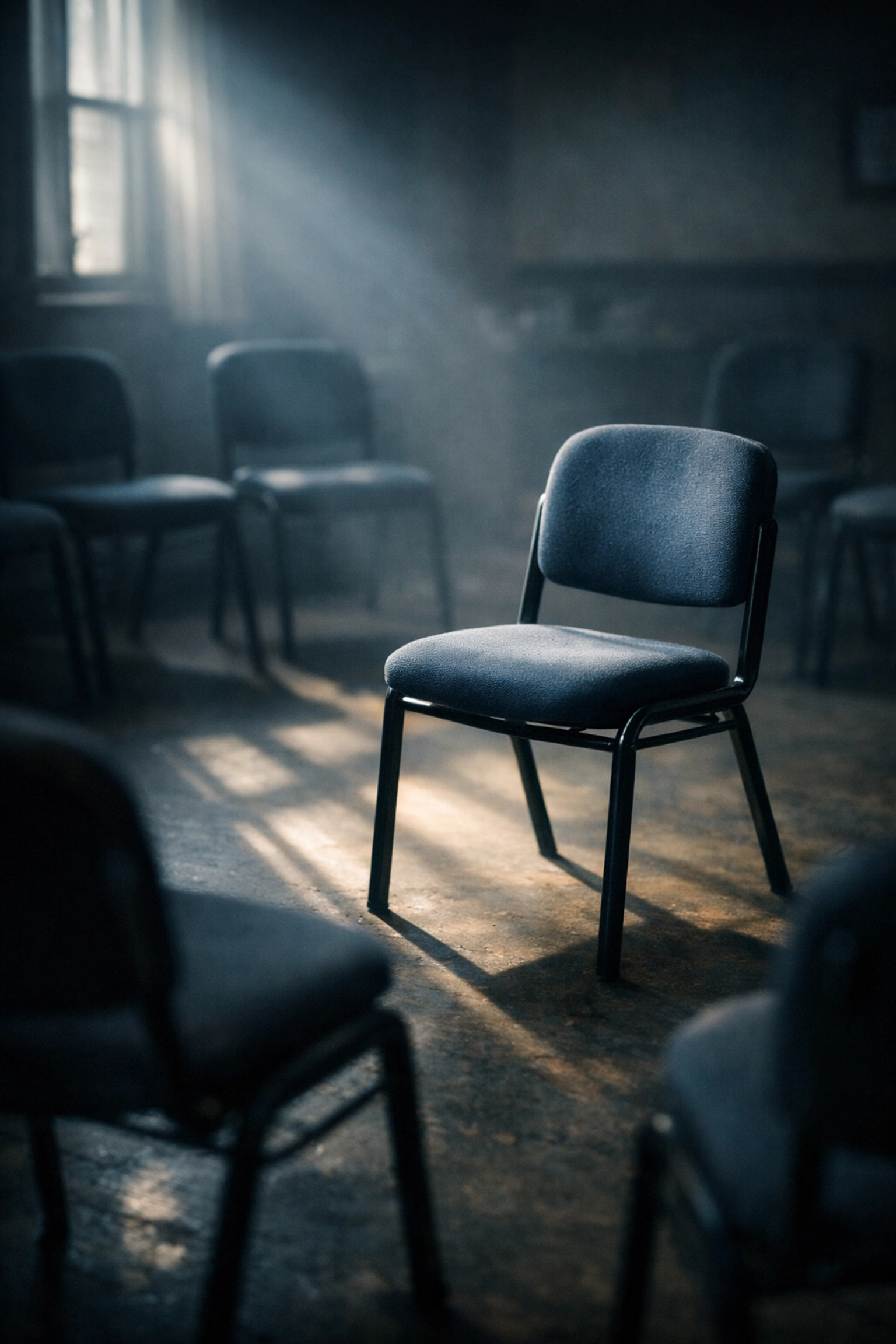
Not because I didn't trust them. Not because they weren't good people. But because I realized something in that moment: I didn't know if they could handle my story without trying to fix it. Without giving me that pitying look that makes you feel smaller than you already do.
So I said something generic about "hard times" and "moving forward" and let the moment pass.
I drove home feeling like a fraud.
The Problem With Performing Recovery
Here's what nobody tells you about sharing your trauma: there's a version of your story people want to hear, and then there's the real one.
The version people want is neat. It has a clear beginning, middle, and end. You hit rock bottom, you found hope, you're healing now. Cue the inspirational music.
The real version? It's messy as hell. It's two steps forward, three steps back. It's good days and terrible days and days where you're not even sure which category you're in. It's being a survivor and still being terrified sometimes.
I spent months trying to figure out how to tell my story the "right" way. The way that would make people comfortable. The way that wouldn't scare anyone off or make them think I was "too much."
And you know what? That just made me feel more alone.
Finding the Difference Between Safe and Brave
There's this concept I came across, the difference between "safe spaces" and "brave spaces."
Safe spaces are important. They're places where you don't have to worry about judgment or harm. Where the rules are clear and everyone's protected.
But brave spaces? Those are different. Those are places where people can show up messy and real and raw, and nobody's trying to pretty it up or fix it. Where discomfort is part of the deal because growth is uncomfortable.

I needed a brave space, not just a safe one.
I needed a place where I could say "I survived cancer and an abusive relationship and some days I still don't feel like I survived anything at all" without someone jumping in to tell me how strong I am or how far I've come.
Because sometimes? You don't feel strong. Sometimes you just feel tired.
The Art of Showing Up Anyway
So here's what I learned about showing up: it's not about having it all figured out. It's not about waiting until you're "ready" or until your story has a happy ending.
It's about showing up messy. Showing up scared. Showing up even when you're not sure what you're going to say or how it's going to land.
The second time I tried to share my story, I didn't script it. I didn't practice. I just opened my mouth and let the truth fall out, jagged edges and all.
I talked about the cancer. I talked about the abuse. I talked about the person I was before all of it and the person I'm becoming now, and how sometimes I don't even recognize myself in the mirror.
And you know what happened?
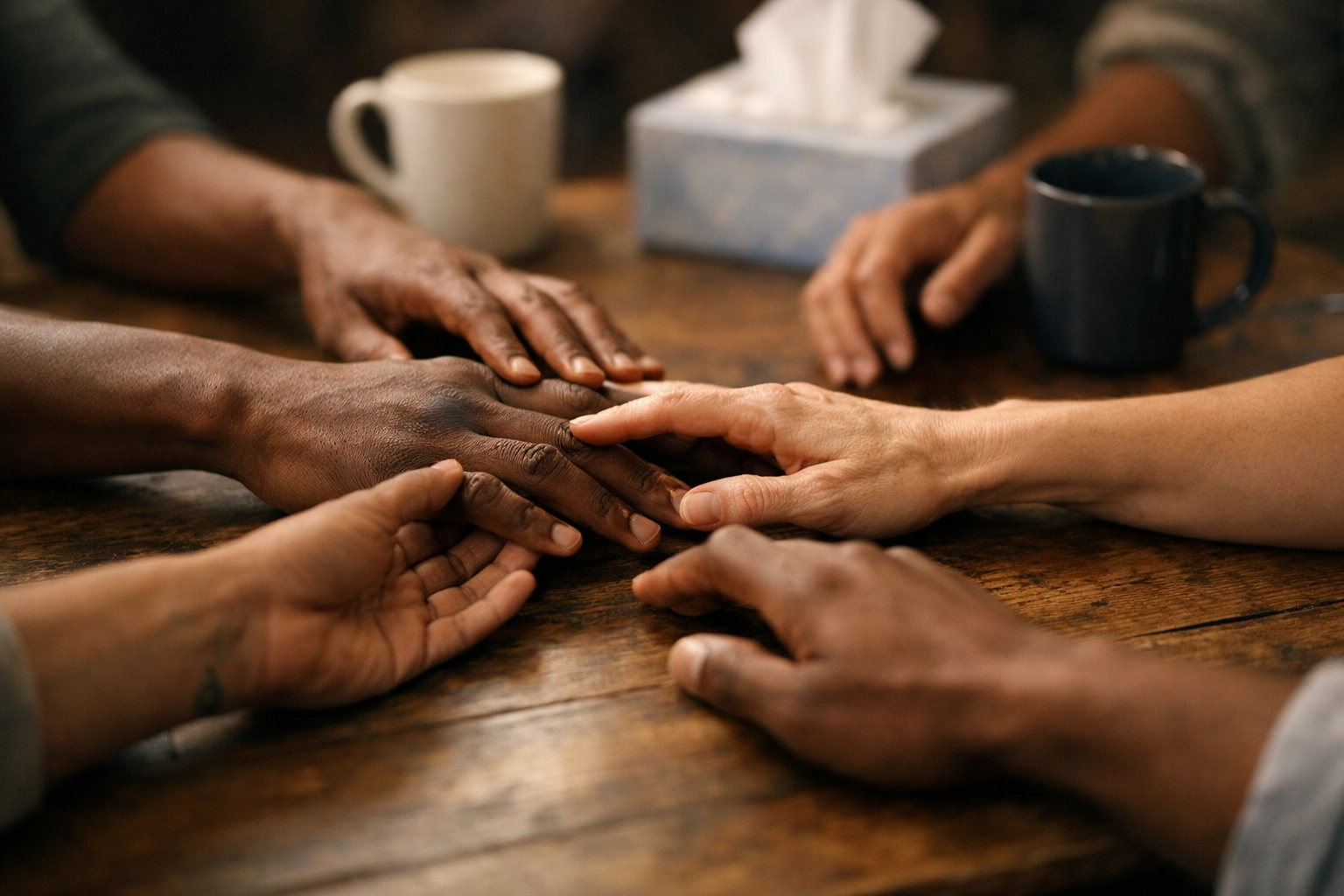
Someone else in the room said, "Me too."
Not the same story. Different trauma, different scars. But the same feeling of being stuck between who you were and who you're trying to become. The same exhaustion of performing strength when you don't always feel it.
That's when I realized: brave spaces don't exist until someone's brave enough to create them.
What "Showing Up" Actually Looks Like
Let me be real with you: showing up doesn't always look heroic.
Sometimes it looks like sending a text when your anxiety's screaming at you to isolate.
Sometimes it looks like going to a meeting even though you're not sure you belong there.
Sometimes it looks like telling one person: just one: what you're actually going through instead of saying "I'm fine."
Sometimes it looks like writing anonymous blog posts on the internet because you're not ready to attach your name to your story yet, but you need to get it out anyway.
(Hi. That's what this is.)
Showing up doesn't mean you have to be loud or public or put your face on a billboard. It just means you stop hiding completely. You crack the door open, even just a little, and let some light in.
The Thing Nobody Warns You About
Here's the part they don't tell you in those inspirational quotes about "finding your voice" and "sharing your truth":
Not everyone's going to get it.
Some people will minimize what you've been through. Some will try to one-up you with their own trauma. Some will get uncomfortable and change the subject.
And that's okay.
You're not showing up for them. You're showing up for you. And for the person who needs to hear "me too."
The right people: the brave space people: they'll stick around. They'll sit with you in the mess. They'll let you be complicated and contradictory and still figuring it out.
Those are your people.
Where I'm At Now
I'm still learning the art of showing up. Still figuring out when to speak and when to hold back. Still navigating the line between being open and protecting my peace.
But I'm here. Week 2 of this journey, and I'm still here.
Some days that feels like enough. Some days it feels like everything.
If you're reading this and you're trying to figure out how to show up in your own life: whether it's at Remix Recovery's support groups or somewhere else: know this: you don't have to have it all figured out. You don't have to be inspirational or perfect or even particularly articulate.
You just have to show up. Messy and real and exactly as you are right now.
That's the art of it. That's the brave part.
Next week: What happens when showing up gets harder (spoiler: it does).